Category

Article

The ISO Standards Revision Process

The ISO standards revision process is a process that ensures that ISO standards are up to date and relevant to the needs of the users and stakeholders. ISO standards are reviewed every five years to determine if they need to be revised, confirmed, withdrawn, or stabilized. The revision process involves the following steps: Proposal stage: A proposal for a new or revised standard is submitted by a national member body, a liaison organization, or the technical committee (TC) responsible for the…

Read article

AIAG Core Tools – What are they?

These Core Tools, in existence since the 1990’s, are key elements of an effective and efficient quality management system to meet your Customers needs and expectations. They include the Advanced Product Quality Planning & Control Plan (APQP), Failure Mode and Effects Analysis (FMEA), Statistical Process Control (SPC), Measurement System Analysis (MSA), and Production Part Approval Process (PPAP) Many automotive OEMs and their suppliers require use of the Core Tools as part of the IATF 16949.  These tools have also been…

Read article
GD&T Training Journey: How do I keep on learning?

As an instructor, one of the most frequently asked questions I’ve heard after a “GD&T Fundamentals” class is: How do I keep learning GD&T more? How do we implement, deploy, or integrate GD&T usage in our department? The answer to the first question often depends on the answer to the second. Consequently, both answers will shape my response to each student’s unique GD&T training journey. My Initial Advice My initial advice is to use what you’ve just learned and share…

Read article
Paradigm Shift with Core Tools for the Organization

There is an increased need for professionals, especially in the automotive industry, to refine their quality skills to meet the needs of the global marketplace. Significant refinements to the ISO/IATF 16944 QMS and the AIAG & VDA FDEA Manual have recently been developed and deployed by Subject Matter Experts within the automotive OEMs, IATF, ISO, AIAG, and VDA.  The ISO 9001:2015, IATF 16949, and the AIAG Core Tools, with its updated FMEA, is now better harmonized for integration within your…

Read article
Learn and Lead: Transforming Your Business Through Strategic Workforce Development

In a world where skills gaps challenge businesses daily, how will your company rise above? Embrace the power of knowledge through strategic workforce development and revolutionize your future. Make this the year to Learn and Lead. Equip your team and organization with cutting-edge learning strategies and tools. Not only will this fuel your current growth, but it will also position you to seize tomorrow’s opportunities. Don’t just survive – thrive. Remember: Leaders shape the future; reactors merely survive it. The…

Read article
7 Quality Tools – The Pareto Chart

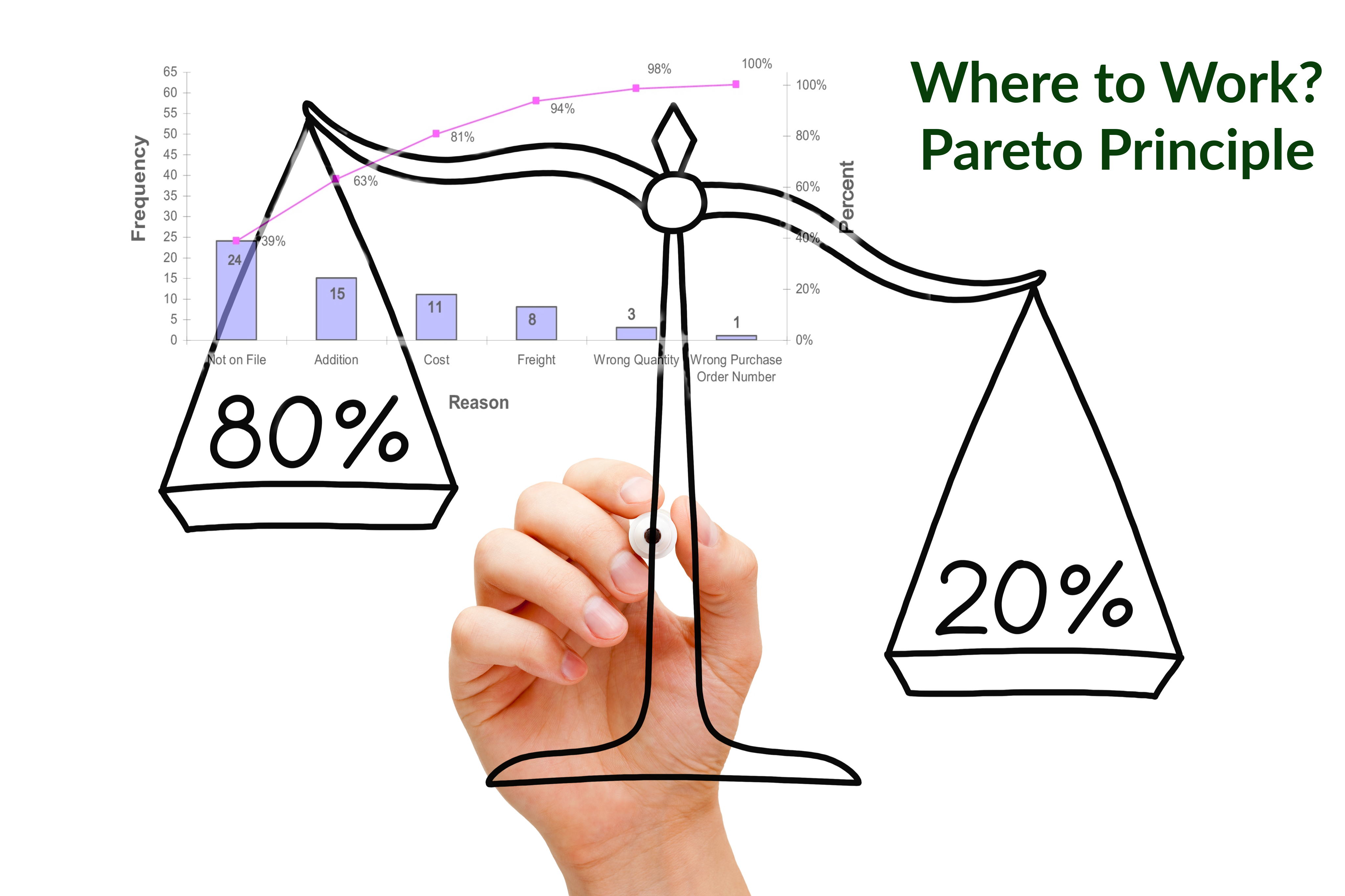
Quality tools have been our focus over the past few months as a means of refreshing their importance within the quality improvement framework. We’ve discussed Root Cause Analysis (RCA), Thought Map, and began our highlights of the 7 Quality Tools through a discussion of Check Sheets. If you recall, these seven basic management tools were originated by Kaoru Ishikawa, who believed that 90 percent of the problems in a business can be solved by using one or more of these…

Read article
a Quality Check Sheet is a great tool
7 Quality Tools – The Check Sheet

  The power behind product process improvement and problem solving are the tools used for that specific end. The renowned Dr. Kouro Ishikawa, arguably the father of quality in Japan and originator of the Ishikawa ‘Cause and Effect’ Diagram, stated “As much as 95% of quality related problems in the factory can be solved with seven fundamental quantitative tools.” Whether you are new to quality or involved for many years, a revisit and discussion of these fundamental tools is always…

Read article
problem solving in manufacturing industry with thought map
Thought Map

Have you or your team embarked on a product or process quality improvement plan only to find a less than desirable solution or no solution at all? As resources are expended, the original problem morphs into a host of other issues that were not anticipated. Undoubtedly, the mistake that was made was to not begin with a Thought Map. This blog touches on the salient points of the process described in the article The Thought Map by Six Sigma Associates…

Read article
Quality skills training
Employee Training for Quality Improvement

In today’s competitive landscape, employee training for quality improvement is no longer optional—it’s essential. Service and manufacturing industries face mounting pressure to hire and retain skilled personnel while adapting to automation and rising customer expectations. Organizations that invest in structured training programs not only boost productivity but also strengthen employee retention and long-term competitiveness. The Talent Shortage and Its Impact With retirements accelerating and operating costs climbing, companies are struggling to fill key positions. Many now promise training as part…

Read article
A QUALITY TOOL: Root Cause Analysis (RCA)

Root Cause Analysis (RCA) is a problem-solving approach that tries to identify the specific cause(s) of problems, not just addressing symptoms. One of the most prevalent quality tools, but often underutilized, RCA can expose information that can lead to valuable outcomes, often resulting into significant cost savings in the long run. The easiest way to start working with this tool is to ask and answer “Why?” five times.   Stop when the corrective actions do not change. Stop when the…

Read article