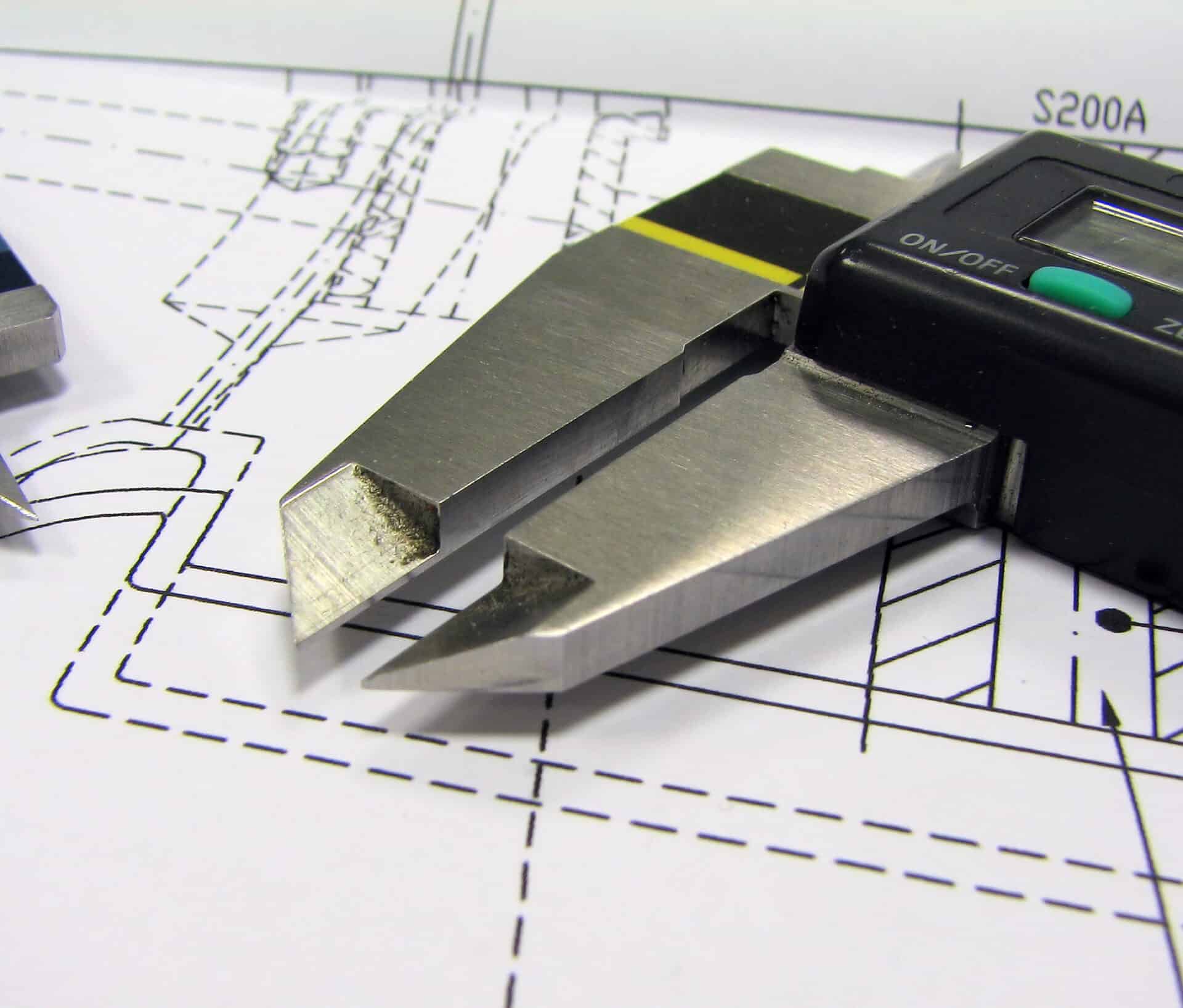
Introduction to Measurement & Calibration
QC Training Services’ Measurement and Calibration Overview is designed to introduce the metrology and calibration technician and other personnel to the field of metrology. Metrology vocabulary, principles, domains, concepts, and processes are discussed.
Course Delivery: In-Person Training, Online Self-Paced, Training for Teams
In-Person Training
Online Self-Paced
Training for Teams
In-Person Training
In-Person Training consists of public classes conducted by one of our subject matter experts at one of our designated locations in one or more consecutive days.
Target Audience
Any individual working in the quality lab, calibration lab, or anyone supporting the measurement and calibration functions of a lab. This can include technicians, engineers, inspectors, operators, and administrative support personnel.
Course Objectives
This training covers the need for good measurements, principles of metrology, fundamental and derived units, measurement terminology, traceability, dimensional metrology, physical metrology measurements, temperature measuring instruments, and calibration. Also taught will be electrical metrology terms, calculations, document standards, calibration systems, and measurement uncertainty.
Benefits
The introduction reviews standards, principles and devices used in measurement and the specific applications of each. Calibration is a key component of ensuring your measurement system is accurate, and we’ll cover the methods, procedures and environments for an effective calibration system.
Agenda
- Introduction to Measurements, Fundamental & Derived Units
- Introduction to Metrology
- Need for measurements
- Importance of Calibration
- Early measurements and metric system
- Principles of Metrology
- 7 Fundamental SI Units – Length, Mass, Time, Electric Current, Thermodynamic temperature, Luminous intensity, Amount of substance
- Derived Units – Examples (resistance, capacitance, pressure, etc.)
- Prefixes and Multipliers (use of milli, micro, nano, etc.)
- Measurement Terms: True Value, Accuracy, Precision, Resolution, and Bias
- Traceability – What is it? Relation to NIST.
- Introduction to Metrology
- Dimensional Standards, Measurements, Calibration
- Measuring Instruments – Micrometers, scales & rules, squares, protractor, calipers, depth gage
- Dimensional Calibration – Standards – gage blocks
- Physical Metrology Terminology, Instruments, Calibration
- Types of Measurements – Mass, Force, Pressure, Flow, Humidity
- Calibration – Physical standards
- Thermodynamic Temperature Devices
- Types of Measuring Instruments – General applications of glass thermometers, thermocouples, thermistors, PRT, pyrometers
- Introduction to Temperature Calibration Principles
- Electrical Metrology
- Metric prefixes
- Basic electrical units – volt, ampere, ohm
- Analog vs. Digital measurements
- Classical types of errors
- Electrical calibration – Application of Derived units
- Noise and grounding
- Standards Organizations and Document Standards
- Standards Organizations – ISO, IEC, ANSI, ISA, PMA, NCSL, DOD
- Documented Standards
- ANSI/NCSL Z540-1-1994
- ISO/IEC 17025
- Laboratory Accreditation
- Accrediting Organizations
- Calibration Systems
- Calibration procedures
- Calibration methods
- Calibration practices and regulations
- Calibration environments
- Calibration processes (includes establishing calibration intervals)
- Document control
- Measurement Uncertainty
- Statistics and measurements
- Types of distributions – normal, rectangular, triangular, U shaped
- Type A and Type B Uncertainty, Combined & Expanded Uncertainty
- What is GUM?
- Factors that introduce errors into measurements
- What is an Uncertainty Budget?
Training Time: 16 hours
Continuing Education Credits (CEUs): 1.6
Online Self-Paced
Our Online Self-Paced courses are available on your own schedule 24/7 during your e-learning subscription.
Introduction to Measurement & Calibration – Online Self-Paced
Measurement and calibration are the foundation of every quality system. This course teaches those fundamentals from the ground up: the SI units, the core vocabulary of metrology, the major measurement disciplines, and a practical introduction to measurement uncertainty.The course was completely rebuilt in 2026. It features all-new videos with professional narration and redesigned visuals, knowledge checks in every technical module, full written transcripts, a 120-term metrology glossary you keep, and a certificate when you pass the final exam. It is available 24/7, on your schedule. Most learners finish in about 10 hours.
Target Audience
This course is for anyone who works with measurement in a quality or calibration environment:
- Calibration and test technicians, from new hires to experienced staff who want formal training
- Quality engineers, inspectors, and machine operators who use calibrated equipment
- Lab supervisors and quality managers preparing teams for ISO/IEC 17025 or IATF 16949
- Purchasing, planning, and administrative staff who handle calibration records and certificates
No metrology background is required. The course starts at the beginning and builds from there.
Benefits
- Learn the vocabulary. Use accuracy, precision, resolution, tolerance, traceability, and uncertainty correctly with auditors and customers.
- Avoid common errors. Recognize the error sources that affect results: temperature, technique, and instrument limitations.
- Be ready for audits. Understand what a sound calibration system includes: intervals, standards, records, and traceability.
- Learn in the right order. The ten modules build on each other and finish with a capstone on measurement uncertainty.
- Get credit. Earn a certificate of completion with contact hours (1.0 CEU) when you pass the final exam.
Course Objectives
By the end of this course, you will be able to:
- Explain what calibration is, why it matters, and what a calibration certificate tells you
- Use SI units correctly: base units, derived units, prefixes, and notation
- Apply core metrology terms: accuracy, precision, resolution, repeatability, reproducibility, and traceability
- Describe the principles and common instruments of dimensional, electrical, physical, and temperature measurement
- Identify the organizations and standards that govern calibration work, including ISO, IEC, ANSI, NIST, and ISO/IEC 17025
- Describe the elements of a calibration system: intervals, calibration standards, environment, and records
- Distinguish Type A and Type B uncertainty and explain combined and expanded uncertainty
Agenda
Ten video modules, and every technical module is followed by a knowledge check. The course ends with a comprehensive final exam.
- Orientation: how the course works and where measurement fits in your quality system
- SI Units & Notation: the seven base units, derived units, prefixes, and correct notation
- Measurement Terminology & Traceability: the vocabulary of metrology and the chain back to national standards
- Dimensional Metrology: length, angle, and form, from gage blocks and calipers to surface plates
- Electrical Metrology: voltage, current, and resistance, and the meters that measure them
- Physical Metrology: mass, force, pressure, and torque
- Temperature Metrology: thermocouples, RTDs, and common sources of thermal measurement error
- Standards Organizations & Document Standards: ISO, IEC, ANSI, NIST, and the documents that govern calibration
- Calibration Systems: intervals, standards, environment, and records
- Measurement Uncertainty (Capstone): Type A and Type B uncertainty, and combined and expanded uncertainty
Final exam: 45 questions covering all modules. A score of 80% is required to pass. You can review course content anytime during your subscription.
Format & Details
- Online and self-paced. Available 24/7 for the length of your subscription (60 days)
- Narrated videos with full written transcripts and optional captions
- Downloadable 120-term metrology glossary included
- Certificate of completion with contact hours when you pass the final exam
- Single-user license; multi-seat discounts available for teams
Subscription Length: 60 days
Estimated Number of Student Hours: 10 hours
Continuing Education Credits (CEUs): 1.0
This class license is sold on a single user basis. Within two business days from registration, each registrant will be emailed a unique username and password to access the course material through our secure online training portal. Successful completion of the course will result in a certificate for course contact hours.
Need to purchase multiple seats?
Please contact us for multiple-seat discount options before making your purchase.
Training for Teams
Training for Teams provides training for your group of employees in either a virtual live setting, or in-person at your facility. Connect with us to customize any of our standard courses to fit your specific need.
Currently scheduled classes are shown below. If no classes are displayed, please contact QCTS for other options.